Sample report — real site, real documents
American Drapery Cleaners — 2235-2239 W Roscoe St, Chicago, IL 60618
IEPA 170000050290 · This is an actual delivered report on a former Chicago dry cleaner. Everything below — the summary, the report, and all 31 source documents — opens without an account. Every report is $19, and if we find no records for your site, you don't pay.
Remediation Summary & Regulatory Status
Status. The site is CLOSED under two No Further Remediation Letters: a 2018 Site Remediation Program Focused NFR (recorded, approved for residential and/or industrial/commercial use with an operating vapor-mitigation system and sealed-barrier conditions) and a 2021 Leaking UST NFR with no land-use limitations after removal of the last tanks and a soil excavation.
The site and its history. The property at 2235-2239 West Roscoe Street, Chicago (Cook County) is a roughly 0.13-acre parcel that was historically occupied by a dye house as early as 1914 and, most recently, by American Drapery Cleaners & Flameproofing, Inc. (reported 1966-2016). The dry-cleaning operation stored naphtha in a series of underground storage tanks (USTs). The recognized environmental condition running through the file is this historical petroleum/naphtha UST use and the dry-cleaning solvent history.
The first release (1995 LUST). A leaking-UST release was reported in 1995 as Incident No. 952028. Several naphtha USTs were removed or abandoned in 1997, and the Illinois EPA issued a No Further Remediation Letter dated February 13, 1998 establishing remediation objectives under an industrial/commercial land-use limitation and prohibiting use of groundwater as a potable supply. Follow-up institutional-control inspections in 2003 and 2017 found the site consistent with that limitation.
The dry-cleaning vapor concern (2017-2018 SRP). In 2017 the owner enrolled in the voluntary Site Remediation Program to obtain a residential No Further Remediation Letter. The combined site-investigation and remedial-action reports found volatile chemicals in soil gas exceeding the TACO Tier 1 Indoor Air Remediation Objectives at the 2235 building, whose basement has limestone-block walls. The Illinois EPA disapproved the report twice, directing the applicant to address the sub-slab depressurization (SSD) system and submit a Tier 3 indoor-inhalation evaluation. After the Tier 3 evaluation was approved, the Illinois EPA issued a Focused No Further Remediation Letter dated January 18, 2018 approving residential and/or industrial/commercial land use — recorded with the Cook County Recorder of Deeds as Document No. 1062329925.
The second release (2021 LUST). In 2021 a new owner removed the remaining tanks, and a naphtha release was reported as Incident No. 20210399. Removal uncovered three 1,000-gallon and one 600-gallon naphtha USTs. Benzene in one sidewall sample exceeded the Tier 1 objective; roughly 30 cubic yards of impacted soil were over-excavated and disposed at a licensed landfill, the confirmatory sample was non-detect, and the Illinois EPA issued a Leaking UST No Further Remediation Letter dated July 27, 2021 stating there are no land-use limitations.
Institutional and engineering controls. The operative controls are those recorded in the 2018 Focused NFR: no building may be occupied within the mapped Building Control Technology (BCT) Area unless the approved sub-slab depressurization system is operating and maintained; the limestone basement walls and sumps must remain sealed; buildings outside the BCT Area need full concrete slab or basement floors with no sumps; and groundwater beneath the site may not be used as a potable supply. Failure to maintain these controls is grounds for voidance of the NFR.
Document timeline
One dry-cleaning property, three regulatory chapters — a 1995 tank release closed in 1998, a 2017–2018 vapor-intrusion closure that won a residential NFR, and a 2021 tank-removal release closed the same year.
1914-1976 — Dry-cleaning origin
The property was occupied by a dye house as early as 1914 and later by American Drapery Cleaners & Flameproofing, Inc., which stored naphtha for dry cleaning in underground storage tanks.
1995 — First release
A leaking-UST release was reported as Incident No. 952028.
1997-1998 — First closure
Naphtha USTs were removed or abandoned in 1997, and the Illinois EPA issued an NFR Letter (February 13, 1998) under an industrial/commercial land-use limitation.
2003 & 2017 — IC inspections
Institutional-control inspections found the site consistent with the industrial/commercial land-use limitation.
2017 — SRP enrollment
The owner enrolled in the Site Remediation Program seeking a residential NFR; soil-gas volatiles exceeded Tier 1 Indoor Air Objectives and the Illinois EPA disapproved the reports twice.
Dec 2017 — Vapor remedy
A sub-slab depressurization system plus sealed limestone walls and sumps were installed for the indoor-inhalation pathway; the Tier 3 evaluation was approved December 13, 2017.
Jan 2018 — Recorded closure
The Focused NFR Letter approved residential and/or industrial/commercial use and was recorded January 23, 2018 as Document No. 1062329925.
Apr-Jul 2021 — Second release & closure
The new owner removed the remaining USTs; impacted soil was excavated, the confirmatory sample was clean, and a LUST NFR with no land-use limitations issued July 27, 2021.
Pre-program historyActive remediation (SRP)Resolved & verified
What they found
Soil. Naphtha-range petroleum: ethylbenzene 1.3 mg/kg and total xylenes 87 mg/kg (Sept 2016); benzene 0.0772 mg/kg (April 2021). Xylenes and the 2021 benzene result exceeded Tier 1 objectives before excavation.
Groundwater. Monitoring wells MW-1 and MW-2; groundwater classified Class II. BTEX non-detect and only low-level PNAs reported; no PNA exceeded the Tier 1 Class I groundwater objectives.
Soil vapor. Chlorinated dry-cleaning solvents in soil gas: tetrachloroethene 0.35 mg/m³ and trichloroethene 0.036 mg/m³. Volatiles exceeded the TACO Tier 1 Indoor Air Remediation Objectives at the limestone-basement building — the vapor-intrusion route drove the remedy.
What remains on the property
Per the recorded NFR letter:
- No building may be occupied within the mapped Building Control Technology (BCT) Area unless the approved sub-slab depressurization system is operating, and it must be maintained.
- The limestone basement walls and the sumps must remain sealed with the approved sealant.
- Outside the BCT Area, buildings must have a full concrete slab-on-grade or full concrete basement floor and walls, with no sumps.
- Groundwater beneath the site may not be used as a potable water supply.
- Failure to maintain these controls is grounds for voidance of the NFR letter. The 2021 LUST NFR adds no land-use limitations of its own.
How we keep it honest: The 2021 closure report was revised between submittals (excavation volumes and tank counts differ across records), and the review flags it as a revision within the source documents — not an OCR error. Every statement in the report links back to its source document and was checked against the source text in an automated QC pass.
The evidence — all 31 documents (897 pages)
The report plus every source file we pulled from the IEPA Document Explorer. Click any card to open the actual PDF.
 Report
IEPA Document Summarizer
PDF
No Further Remediation Letter (LUST Incident 952028)
Doc 1 · 1998-02-13
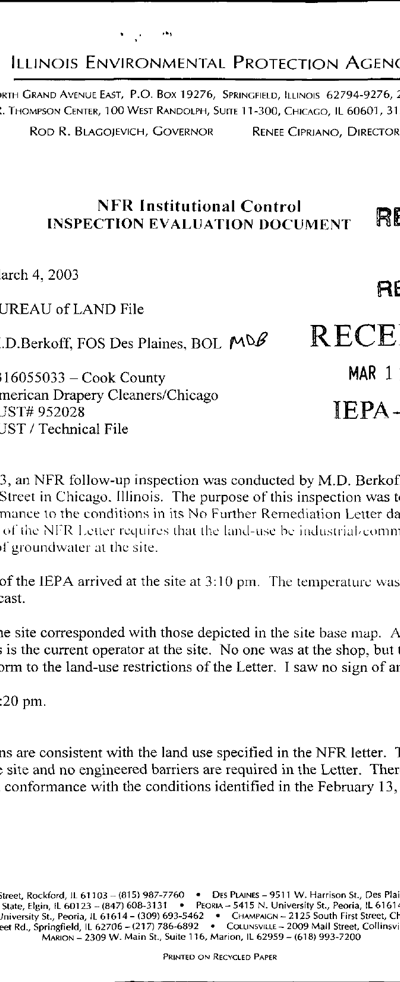
NFR Institutional Control Inspection
Doc 2 · 2003-03-04
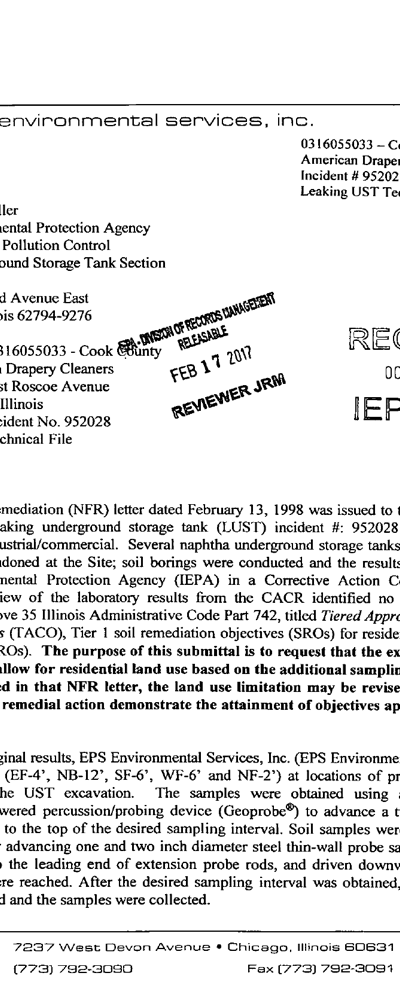
LUST Submittal - Request to Amend NFR to Residential Land Use
Doc 3 · 2016-10-17
LUST Submittal (Signed Copy) - Request to Amend NFR to Residential Land Use
Doc 4 · 2016-10-17
NFR Land-Use Inspection Evaluation
Doc 5 · 2017-02-08
Combined Focused Site Investigation_ Remediation Objectives _ Remedial Action Plan (FSIR - ROR - RAP)
Doc 6 · 2017-04-19
Illinois EPA SRP Enrollment Acknowledgment
Doc 7 · 2017-05-12
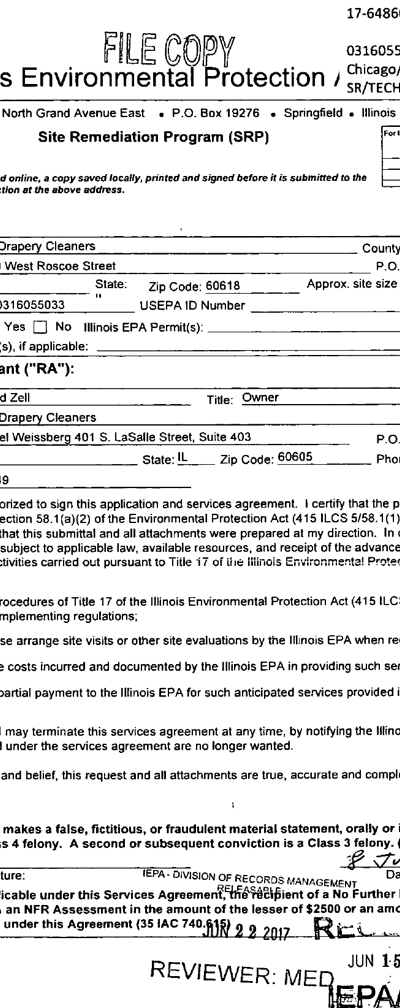
Site Remediation Program Application _ Services Agreement (DRM-1)
Doc 8 · 2017-06-15
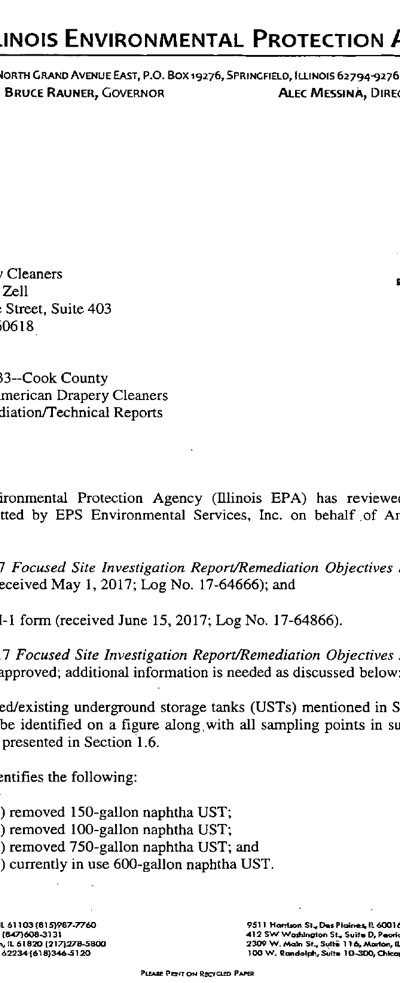
Illinois EPA Disapproval of FSIR/ROR/RAP
Doc 9 · 2017-06-28
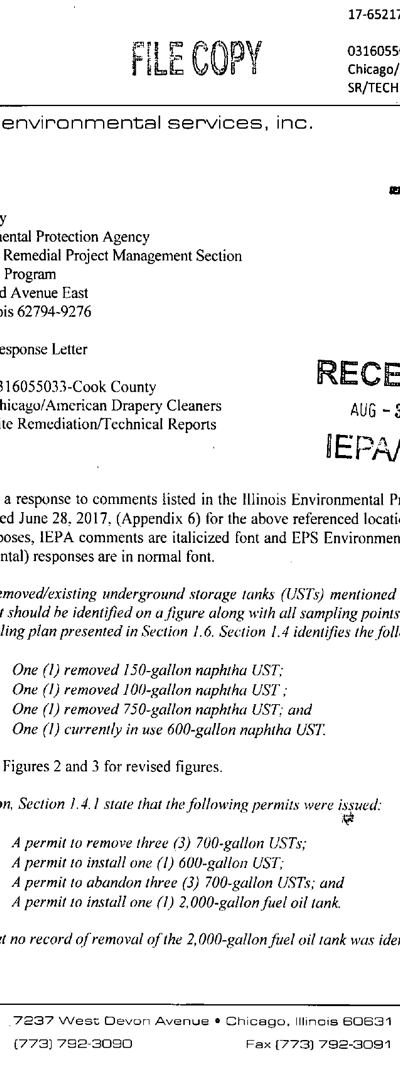
Response Letter & Remedial Action Completion Report
Doc 10 · 2017-08-01
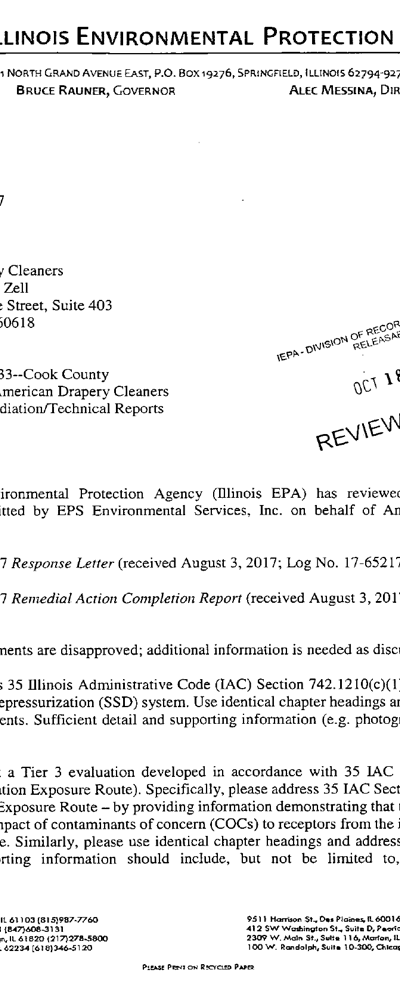
Illinois EPA Disapproval of Response Letter & RACR
Doc 11 · 2017-09-06
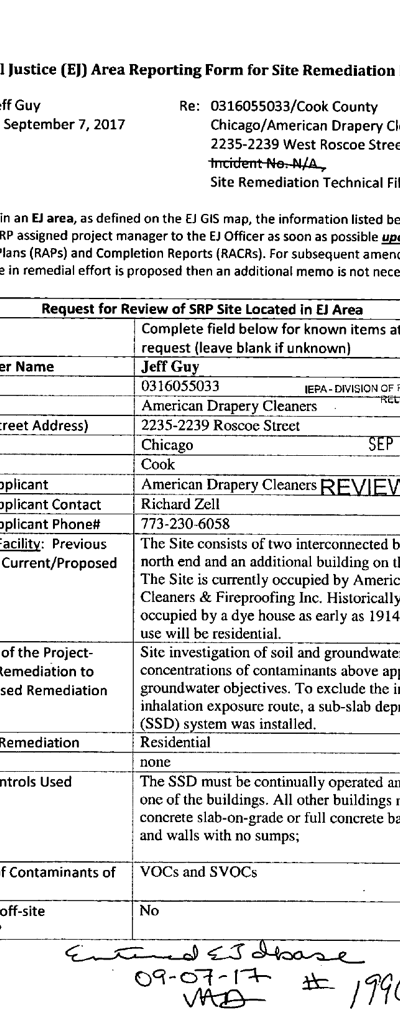
Environmental Justice Area Reporting Form
Doc 12 · 2017-09-07
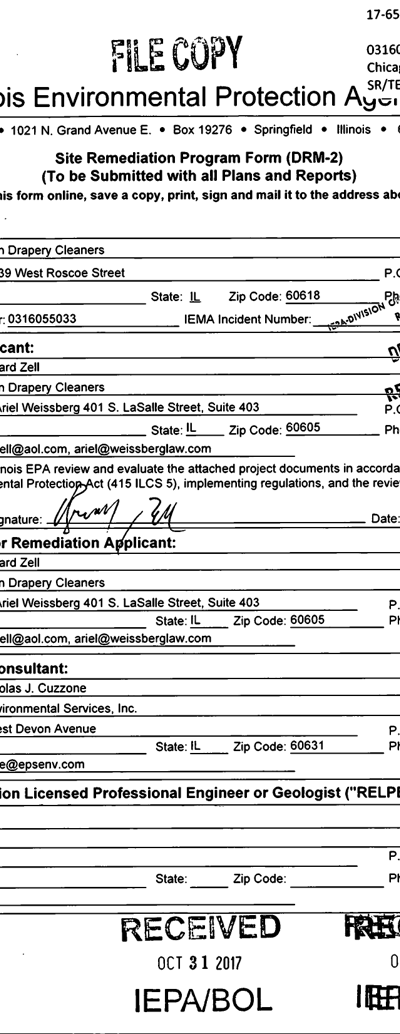
Response Letter & Tier 3 Indoor Inhalation Evaluation
Doc 13 · 2017-10-26
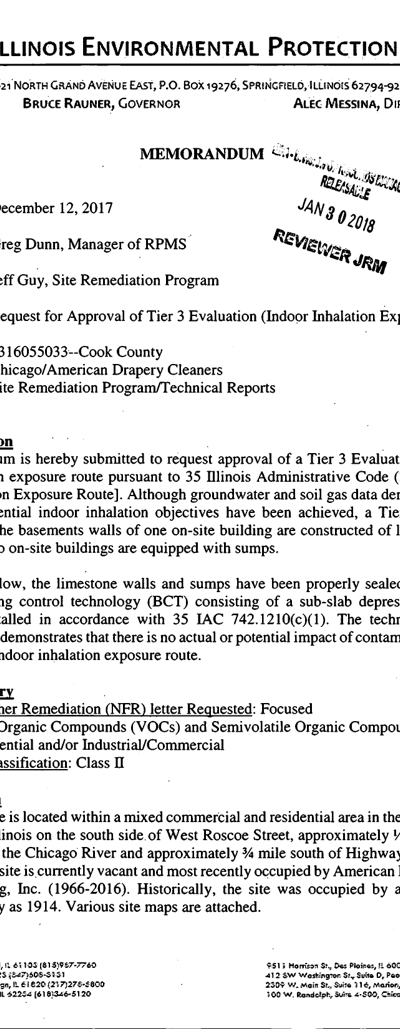
Illinois EPA Memorandum - Request for Approval of Tier 3 Evaluation
Doc 14 · 2017-12-12
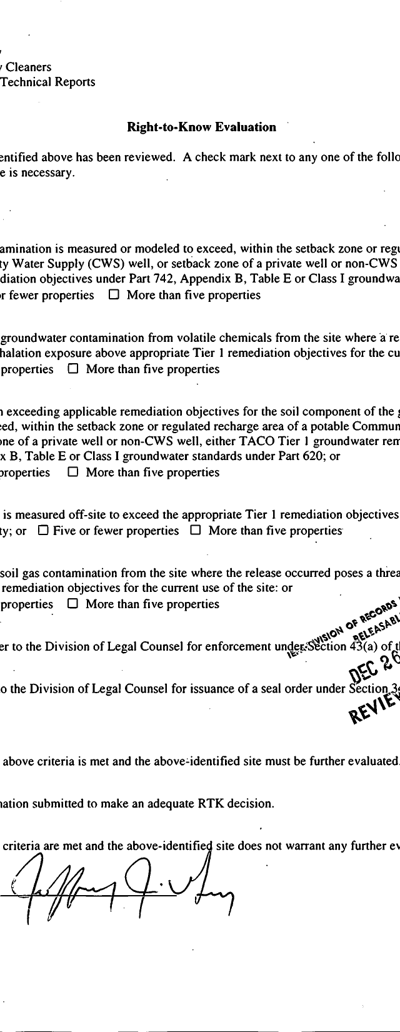
Right-to-Know Evaluation
Doc 15 · 2017-12-12
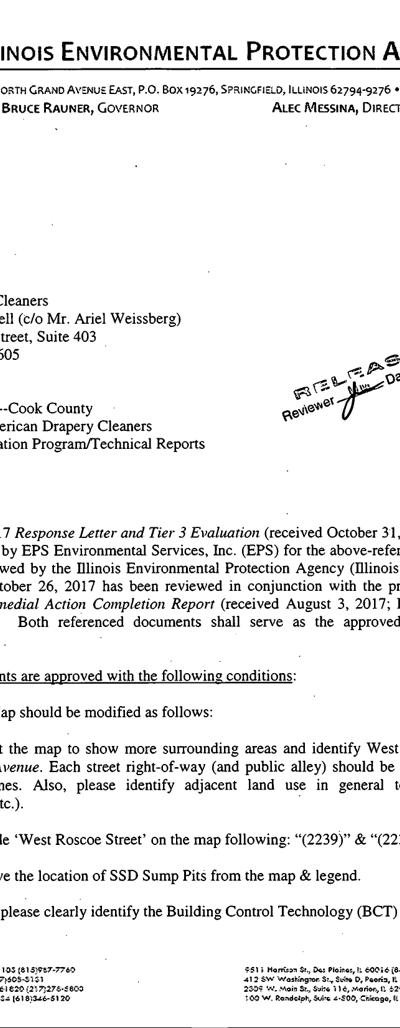
Illinois EPA Approval with Conditions & Draft NFR Letter
Doc 16 · 2017-12-19
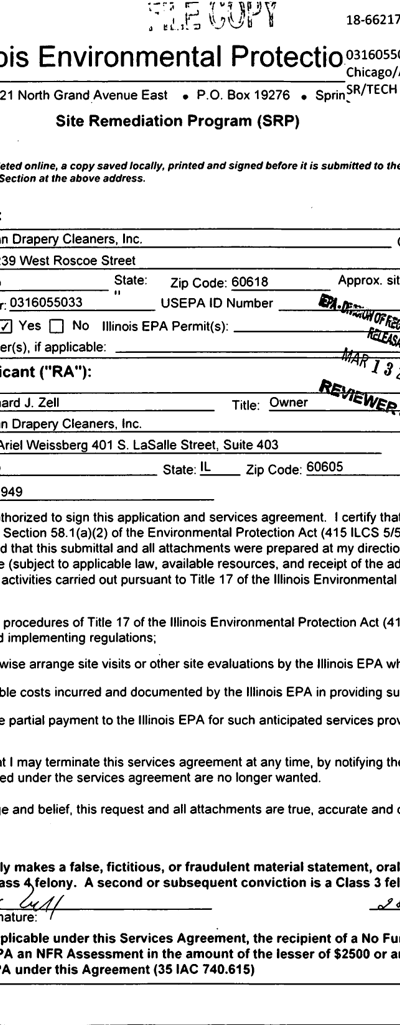
Updated Site Remediation Program Application (DRM-1)
Doc 17 · 2018-01-08
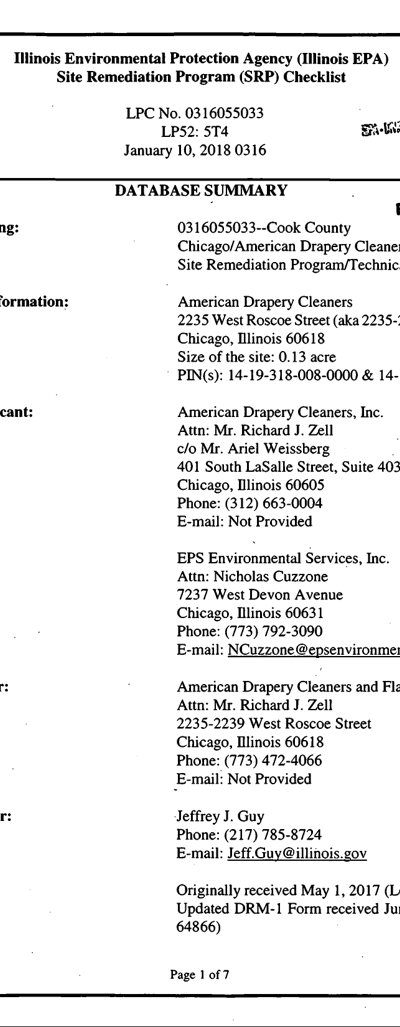
Site Remediation Program Checklist / Database Summary
Doc 18 · 2018-01-10
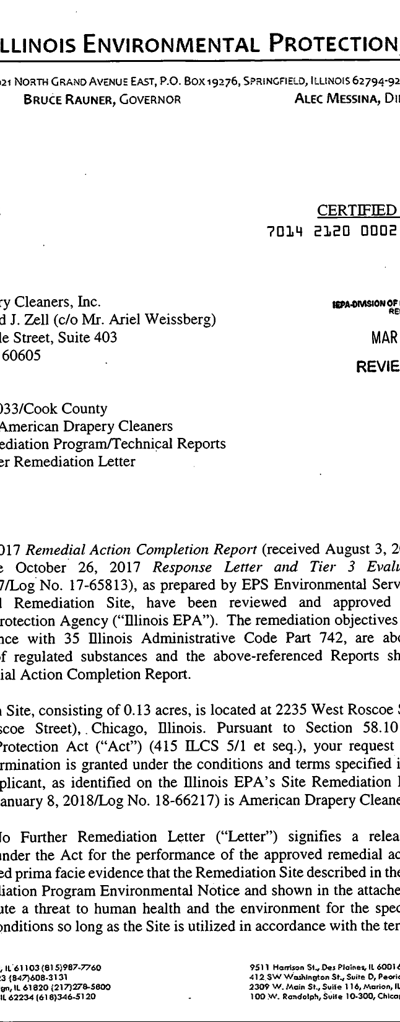
Focused No Further Remediation Letter (Final)
Doc 19 · 2018-01-18
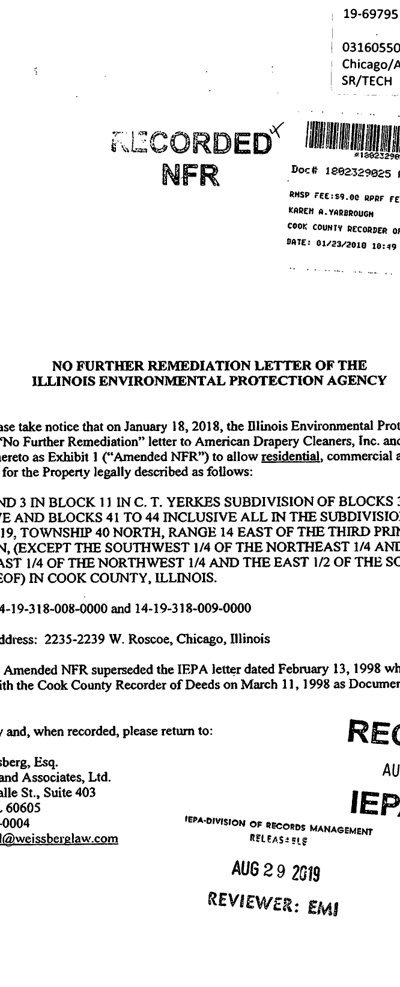
Recorded Focused No Further Remediation Letter
Doc 20 · 2018-01-18
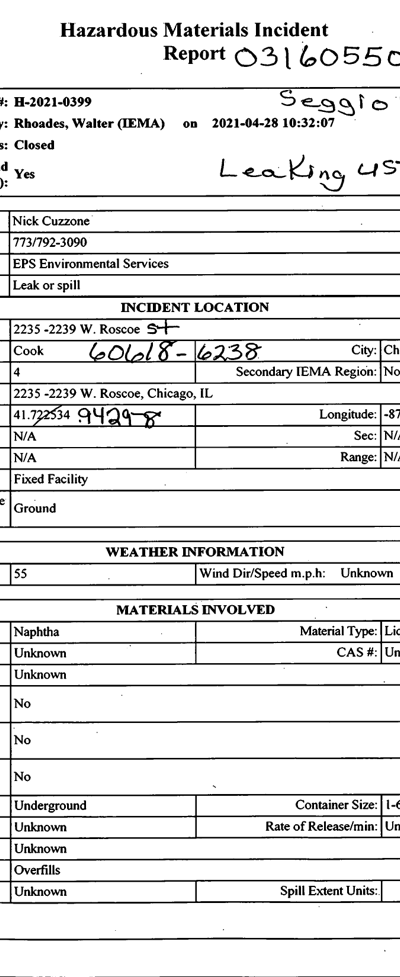
IEMA Incident Report _ Illinois EPA LUST Notification (Incident 20210399)
Doc 21 · 2021-04-30
20-Day Certification
Doc 22 · 2021-05-06
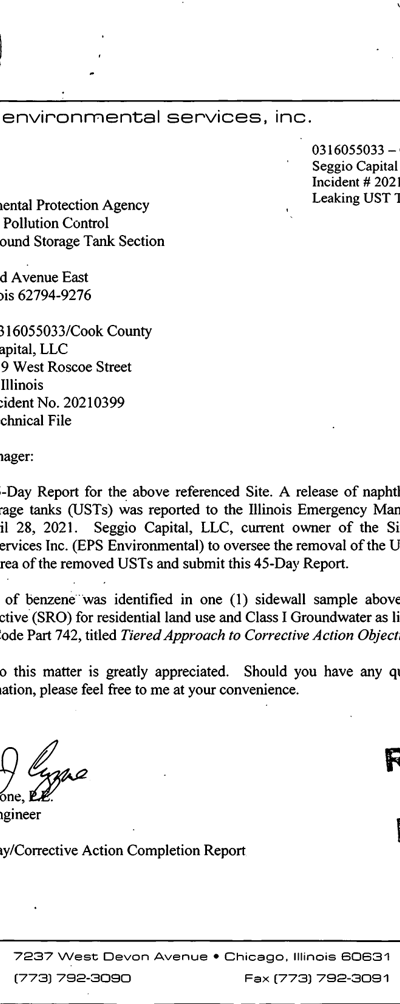
45-Day / Corrective Action Completion Report
Doc 23 · 2021-06-15
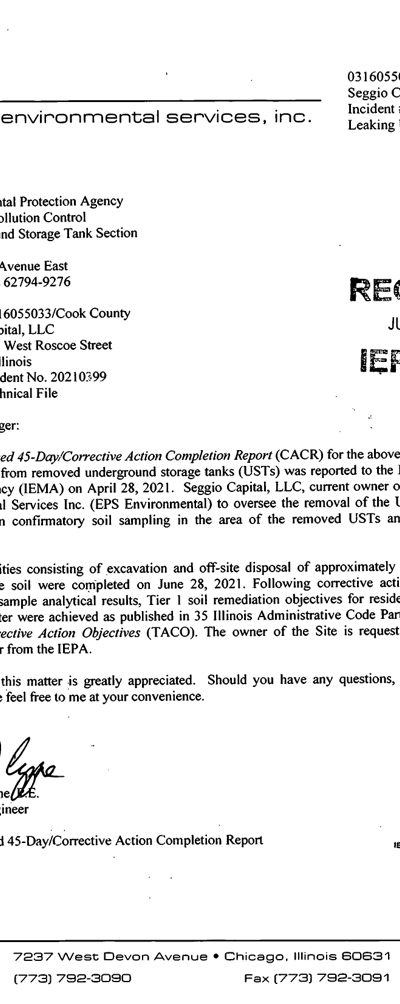
Revised 45-Day / Corrective Action Completion Report
Doc 24 · 2021-07-12
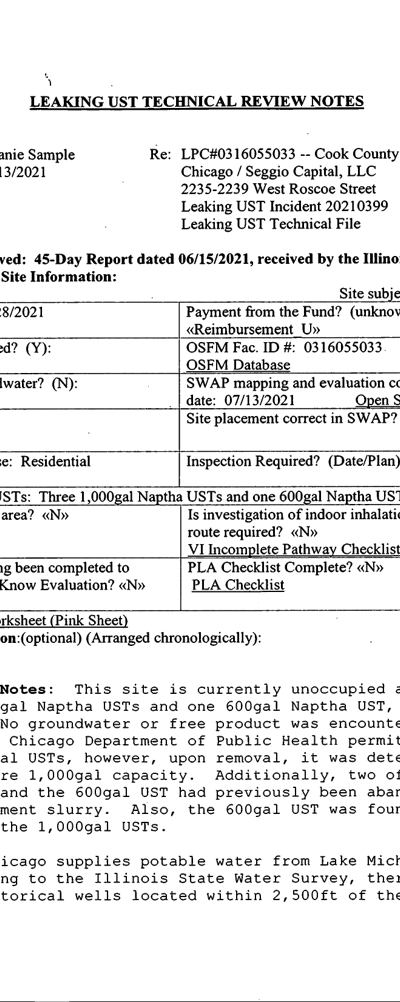
Illinois EPA Technical Review Notes (45-Day Report)
Doc 25 · 2021-07-13
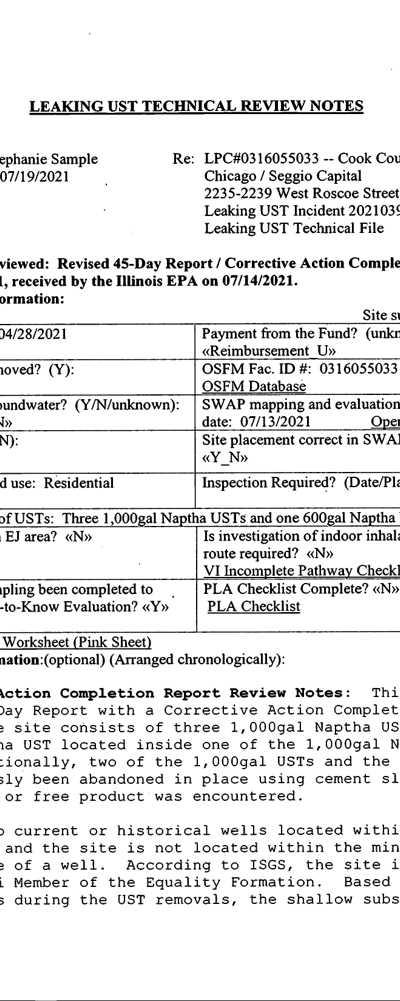
Illinois EPA Technical Review Notes (Revised 45-Day/CACR)
Doc 26 · 2021-07-19
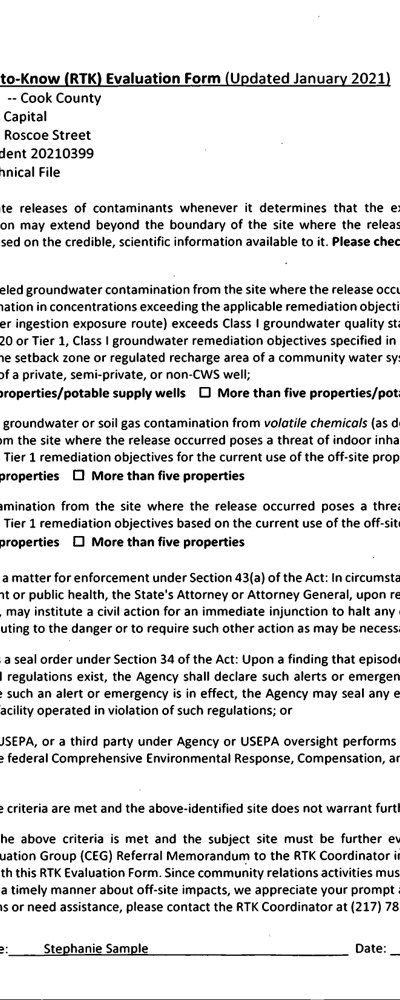
Right-to-Know Evaluation
Doc 27 · 2021-07-19
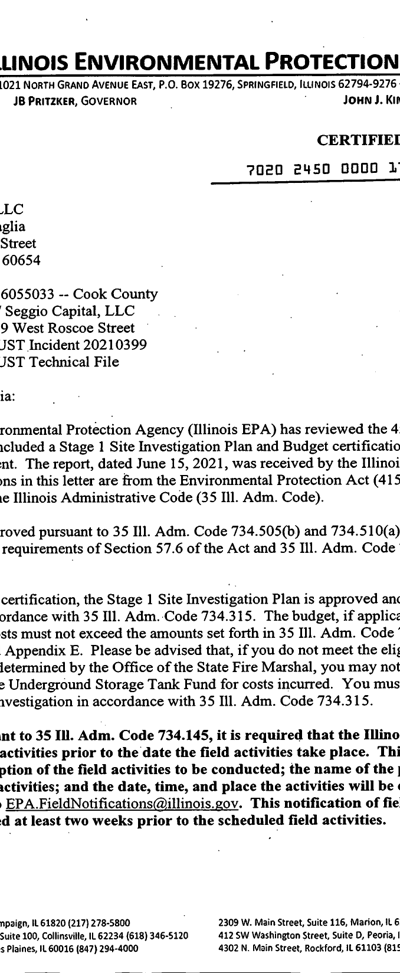
45-Day Report / Stage 1 Site Investigation Plan Approval
Doc 28 · 2021-07-21
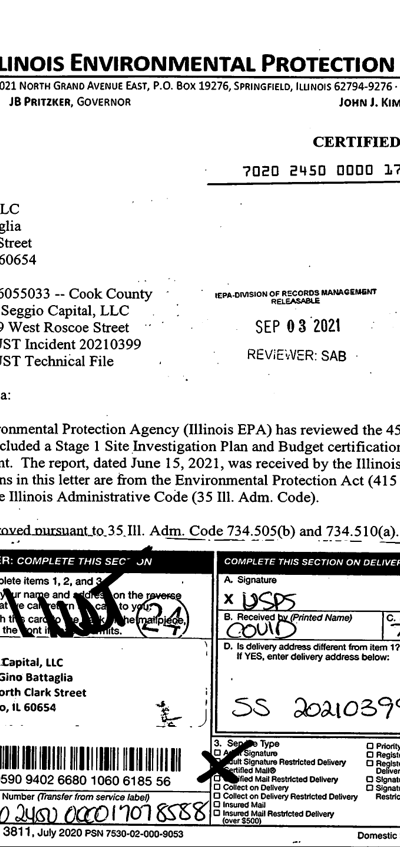
45-Day Report / Stage 1 Approval (Certified Mail Copy)
Doc 29 · 2021-07-21
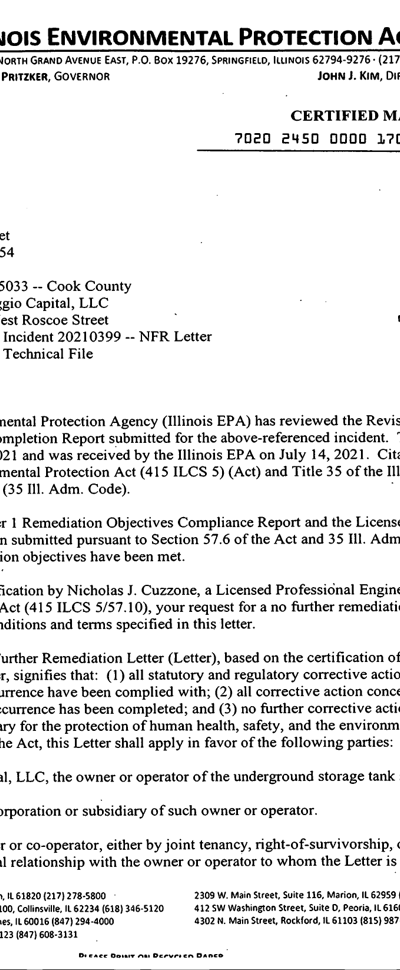
No Further Remediation Letter (LUST Incident 20210399)
Doc 30 · 2021-07-27
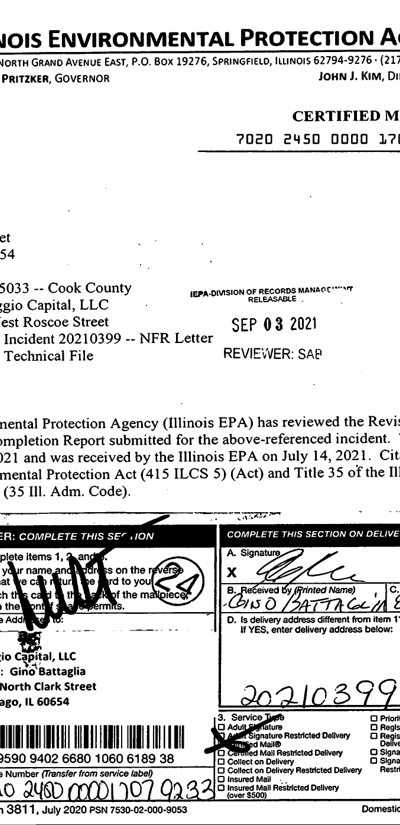
No Further Remediation Letter Transmittal
Doc 31 · 2021-07-27
Want this for your site?
Give us an Illinois address or IEPA ID and get the same report — every public record found, read, summarized, and verified. 🔒 Secure checkout. If we find no records for your site, you don't pay.
Buy a report — $19Your first five reports are free when you create an account.
Same report for your site — no records found, no charge.
Buy a report — $19